
Why I Don't Use AI to Change Your Baby's Appearance
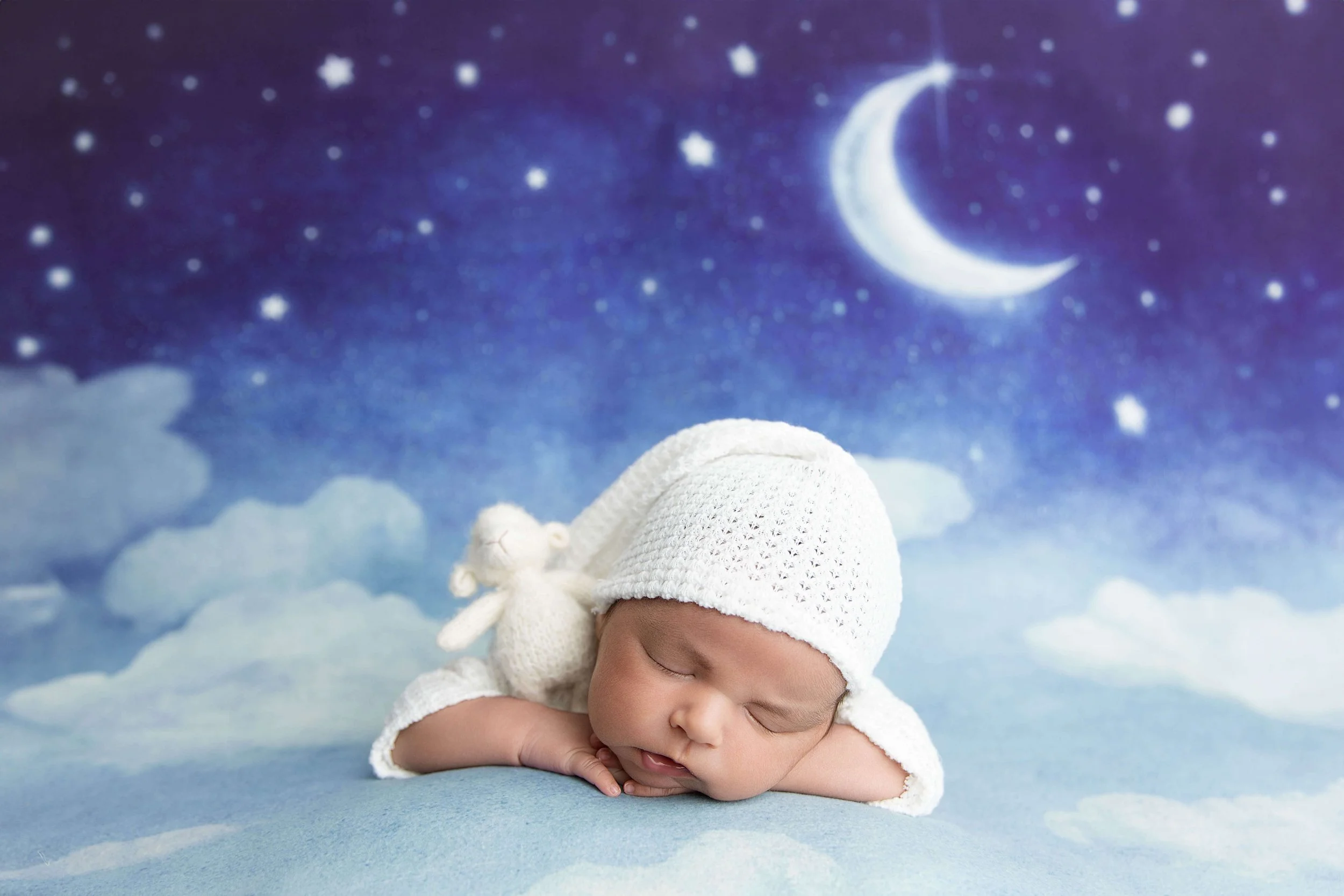
If you've spent any time scrolling photography accounts lately, you've probably noticed it. A baby photo that looks a little too smooth. Eyes that seem a touch too big. Skin that looks like it belongs to a doll instead of a newborn. AI editing has made it incredibly easy to change how a baby actually looks, and it's becoming more common than most parents realize.
I want to be upfront with you about where I stand on this, because it matters more than almost anything else I do as a photographer.
I use some AI-assisted tools in my workflow. I won't pretend otherwise, and I don't think I should have to. But there is a hard line I do not cross, and that line is your baby's actual appearance. I will never use AI to change the shape of your baby's face, the size of their eyes, the color of their skin, or any feature that makes them who they are.
What "AI-Assisted" Actually Means in My Workflow
People hear "AI" and assume it means a baby's whole face got run through a filter. That's not how I use it, and I think it's worth explaining clearly so there's no mystery about what happens to your photos after your session.
AI-assisted tools, in my studio, are used for things like:
Cleaning up a distracting background detail
Smoothing out a wrinkle in a backdrop or blanket
Minor color and lighting adjustments
Speeding up repetitive technical edits so I can spend more time on the creative and meaningful parts of your gallery
That's it. That's the whole list. None of it touches your baby.
What I will not do, ever, regardless of how fast or tempting the technology gets, is use AI to alter your baby's actual appearance. Not their skin tone. Not their face shape. Not their eyes, their nose, or anything else that makes them uniquely them. If a baby has a normal newborn feature, even one a parent might feel unsure about, my job is to photograph it well and present it with care. Not to erase it with a slider.
Why This Distinction Matters So Much to Me
I became a newborn photographer because I wanted to hold on to the version of my own babies as they actually were in those first weeks. Not an idealized, software-smoothed version. The real one. The one with the slightly squished nose from delivery, the uneven skin tone that evens out in a few weeks, the unmistakable family resemblance that shows up in a tiny face before anyone else gets to meet them.
That's the whole point of newborn photography. You're not paying for a baby that looks like every other baby on Instagram. You're paying to preserve the one who is actually yours, exactly as they arrived.
When a studio uses AI to reshape a baby's features, even with good intentions, it sends a quiet message that the baby wasn't quite right as they were. I don't believe that, not for a second, and I'm not willing to build a business around a tool that implies it.
A Quick Word on Where AI Is Showing Up in This Industry
This isn't a hypothetical concern. As AI editing tools have gotten faster and easier to use, more photographers (and plenty of phone apps marketed directly to parents) have started offering "enhanced" baby photos. Smoother skin. Bigger eyes. Slimmed-down faces. Some of it is marketed as a feature. I think it's worth parents knowing this is happening so they can ask their photographer directly what their policy is, the same way I'm telling you mine.
If you're searching for a newborn photographer in Allen, Frisco, Plano, McKinney, Princeton, or anywhere in North Texas, this is a fair question to ask any studio you're considering: do you use AI to change a baby's features, and if so, how much? You deserve a real answer, not a vague one.
What You Can Expect From Your Lama's Littles Gallery
When your gallery arrives, you should be looking at your baby. Not a smoothed-out, AI-adjusted version of your baby. The real one, photographed with good light, careful posing, and editing that respects what was actually in front of the camera.
This is also why I take session timing, posing, and lighting so seriously from the very beginning. Good newborn photography starts with getting it right in camera, not fixing it afterward. When you book with a safety-certified, experienced newborn photographer, less needs to be "fixed" in the first place, because the session itself was done with care.
If you want to understand more about how I handle editing day to day, including what I do touch up and what I intentionally leave alone, I've written about that in detail in When I Retouch and When I Don't. And if you're curious about the bigger picture of how I think about editing as a whole, My Editing Philosophy lays out the full approach.
-
Yes, in a limited way. AI-assisted tools are used for background cleanup, minor color correction, and other technical, non-baby-related adjustments. AI is never used to change a baby's actual features or appearance.
-
No. This is a firm policy, not a case-by-case decision. A baby's actual features are never altered, regardless of the request or the tool available.
-
As AI editing tools have become faster and more accessible, some studios and apps use them to smooth skin, enlarge eyes, or otherwise "enhance" a baby's look. It's a trend worth asking about directly with any photographer you're considering.
-
Ask directly. A photographer who is confident in their approach should be able to explain exactly what they do and don't edit, the same way this post does.
-
Not at all. Editing for color, light, and overall presentation still happens. The difference is that your baby's actual appearance stays untouched, while the technical quality of the image is still refined.
Lama's Littles Photography is a newborn and family photography studio based in Allen, TX, serving families throughout Frisco, Plano, McKinney, Princeton, and the greater North Dallas area. Explore the portfolio or get in touch to learn more about booking a session.